Stations Overview
Purpose
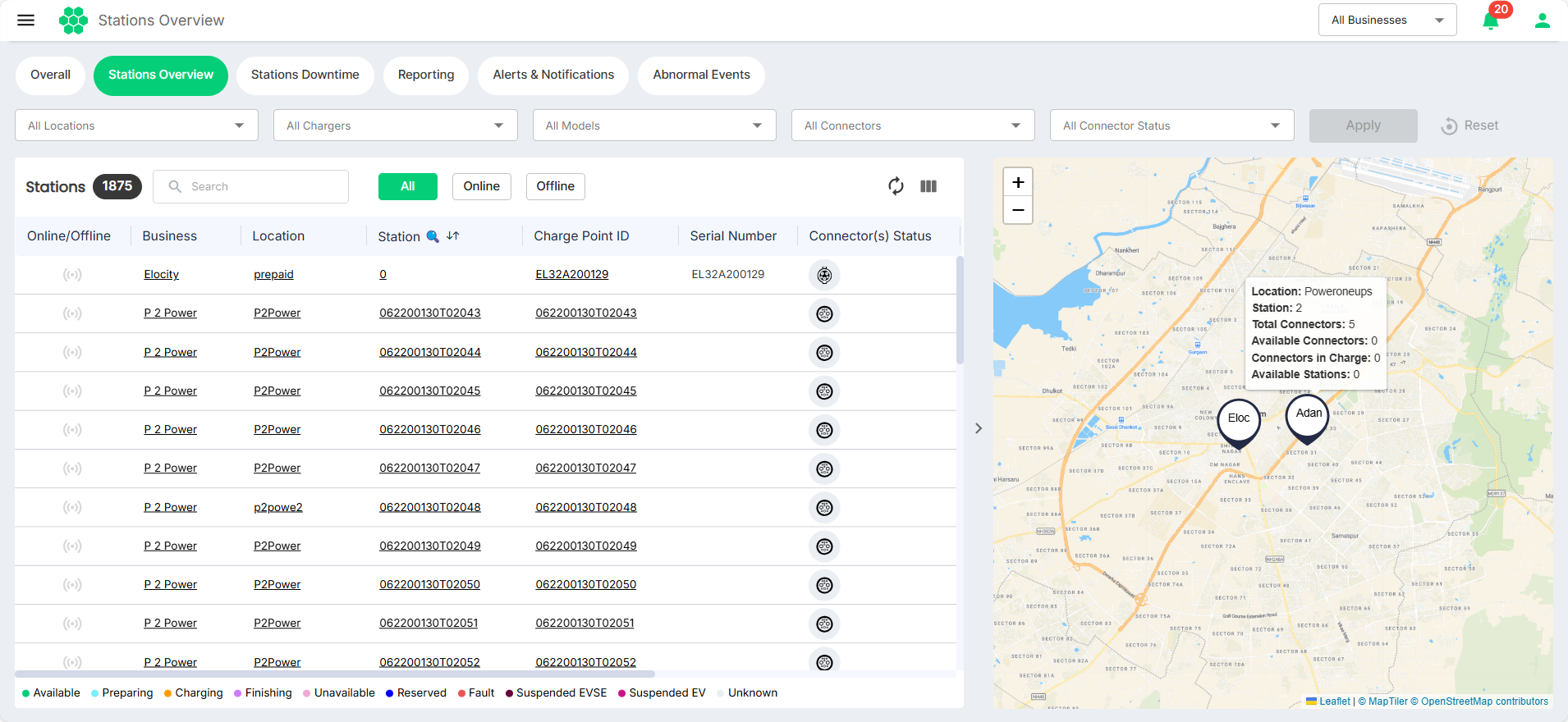
The Stations Overview dashboard provides a centralized view of charging stations across the organizations available to the signed-in user. It combines configurable filters, an operational status grid, a geographic map, and station-level details so that users can monitor connectivity, connector availability, power demand, and recent station activity from one page.
Station information can change as new status notifications, transactions, and OCPP messages are received. Available records and actions depend on the user's business assignments and permissions.
Accessing the page
- Sign in to the HIEV portal.
- Open Dashboard.
- Select Stations Overview.
Page filters
The filter bar limits the stations displayed in the grid and map. The page provides the following filters:
- Business — Use the business selector in the page header to view all permitted businesses or a specific business.
- Location — Select one or more charging locations.
- Chargers — Limit the results to the selected chargers.
- Models — Limit the results to stations with the selected charger models.
- Connectors — Filter by connector type.
- Connector Status — Filter by the current connector state.
After changing a filter, select Apply to update the results. Select Reset to clear the page-level filters and return to the default selection.

Station summary and search controls
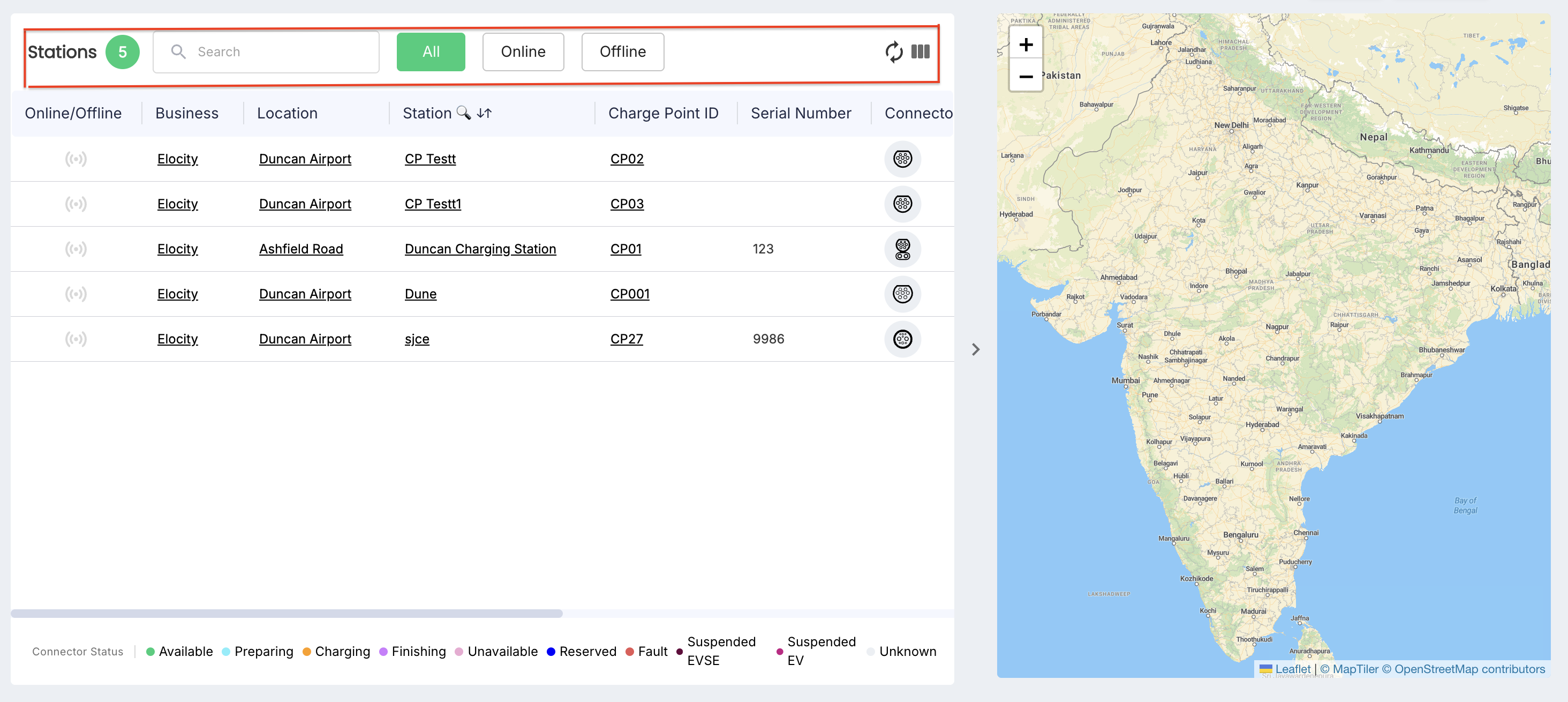
The Stations counter shows the number of stations included in the current result set.
Use the Search field to locate a matching record in the grid. Search is useful when the station name, charge point ID, serial number, business, or location is already known.
Use the status buttons to change the station connectivity view:
- All — Displays online and offline stations.
- Online — Displays stations currently connected to the platform.
- Offline — Displays stations that are not currently connected.
Select Refresh to request the latest available station information without leaving the page.
Stations grid
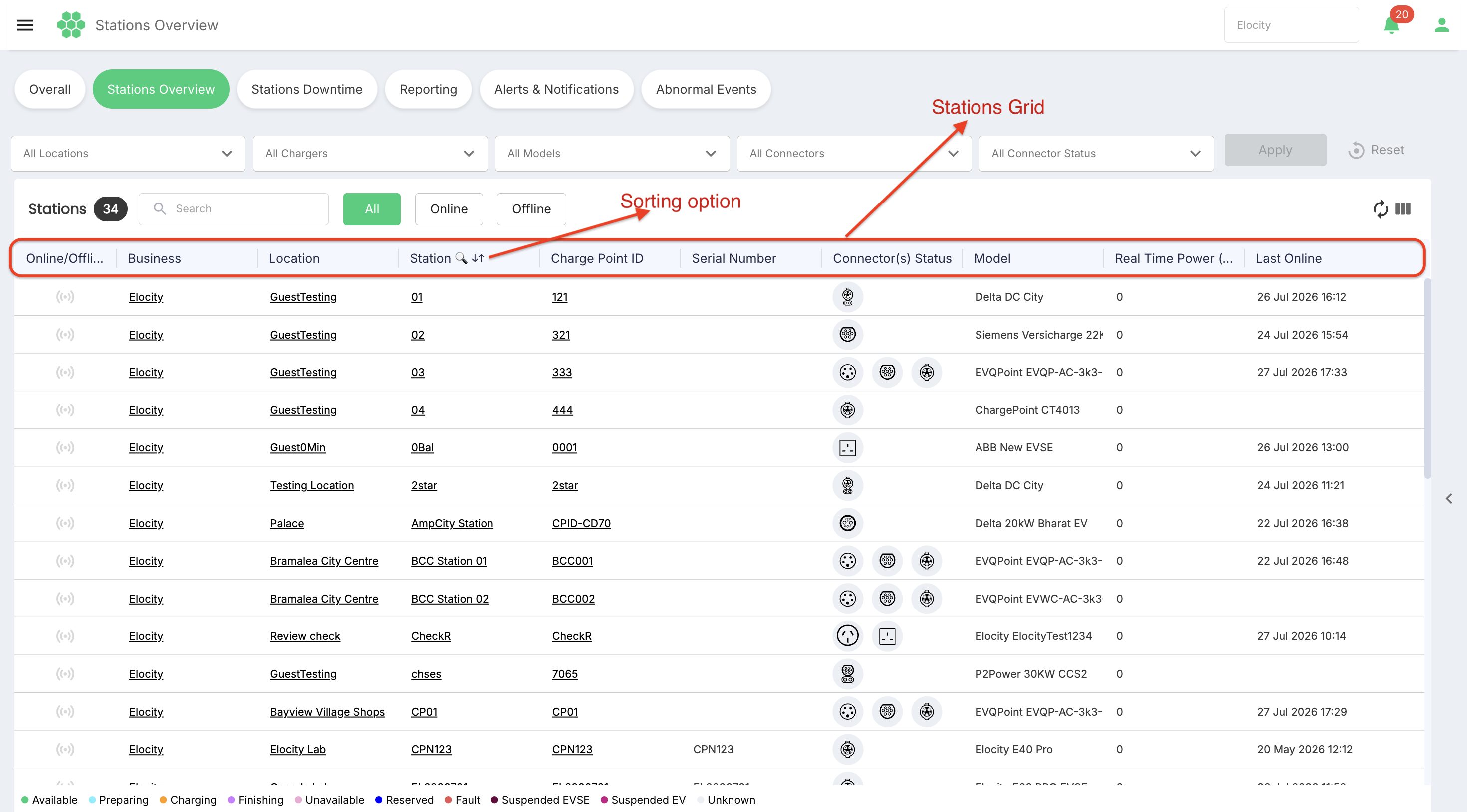
The grid provides a row for each station in the current result set. Column order and visibility may vary if the user has customized the grid.
| Column | Description | Interaction |
|---|---|---|
| Online/Offline | Indicates whether the station is currently connected to the platform. | Use the status filters above the grid to show all, online, or offline stations. |
| Business | Identifies the business responsible for the station. | Select the linked business name to open its Business Details page. |
| Location | Identifies the charging location to which the station is assigned. | Select the linked location name to open its Location Details page. |
| Station | Shows the station's display name. | Select the linked station name to open the station side panel without leaving the dashboard. |
| Charge Point ID | Shows the unique charge point identifier used by the charging platform. | Select the linked ID to open the full Station Management page for that charge point. |
| Serial Number | Shows the hardware serial number reported or assigned to the station. | Use this value when identifying the physical unit or communicating with a manufacturer or field technician. |
| Connector(s) Status | Shows the connector type and current state for the station's connector or connectors. | Review the status icon or label to identify available, charging, unavailable, faulted, or other connector states. |
| Model | Shows the station manufacturer/model information. | Use this information when filtering stations, reviewing compatibility, or planning maintenance. |
| Real Time Power (kW) | Shows the station's current power output in kilowatts. | Use this value to identify stations that are actively delivering power and to monitor live demand. |
| Last Online | Shows when the station was last confirmed online, or indicates that it is currently online. | Use this value to assess how long an offline station may have been disconnected. |
Sorting and column-level filtering
Where available, use the controls in a column header to sort or further filter the grid by that column. These controls are useful when identifying offline stations, high-power stations, a particular model, or the oldest Last Online value.
Showing and hiding columns
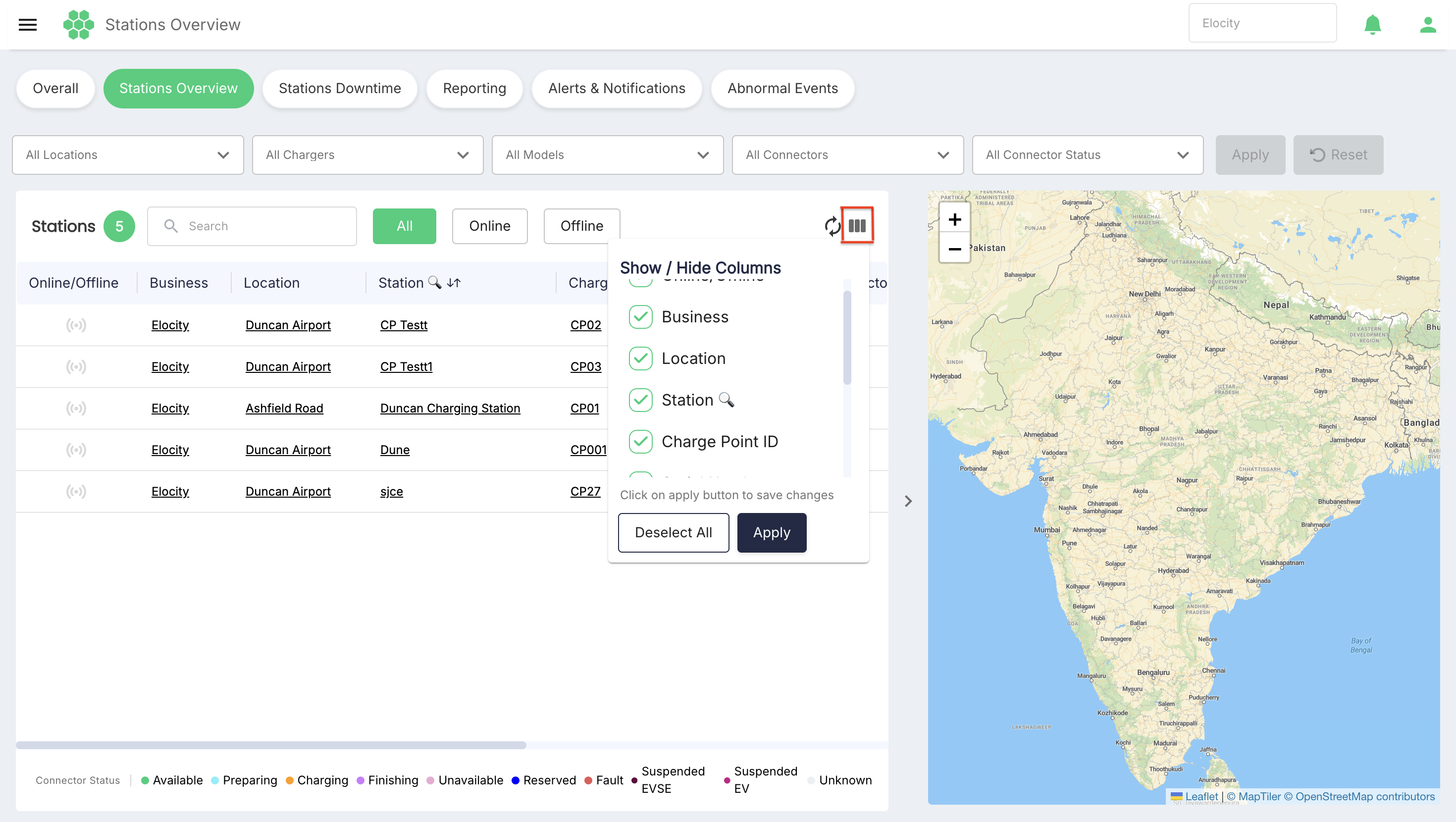
Select Column Filter to open the Show / Hide Columns menu. The menu contains a checkbox for each supported column:
- Online/Offline
- Business
- Location
- Station
- Charge Point ID
- Serial Number
- Connector(s) Status
- Model
- Real Time Power (kW)
- Last Online
Clear a checkbox to hide a column or select it to show the column. Deselect All clears all column selections. Select Apply inside the column menu to save the revised grid layout.
Map view
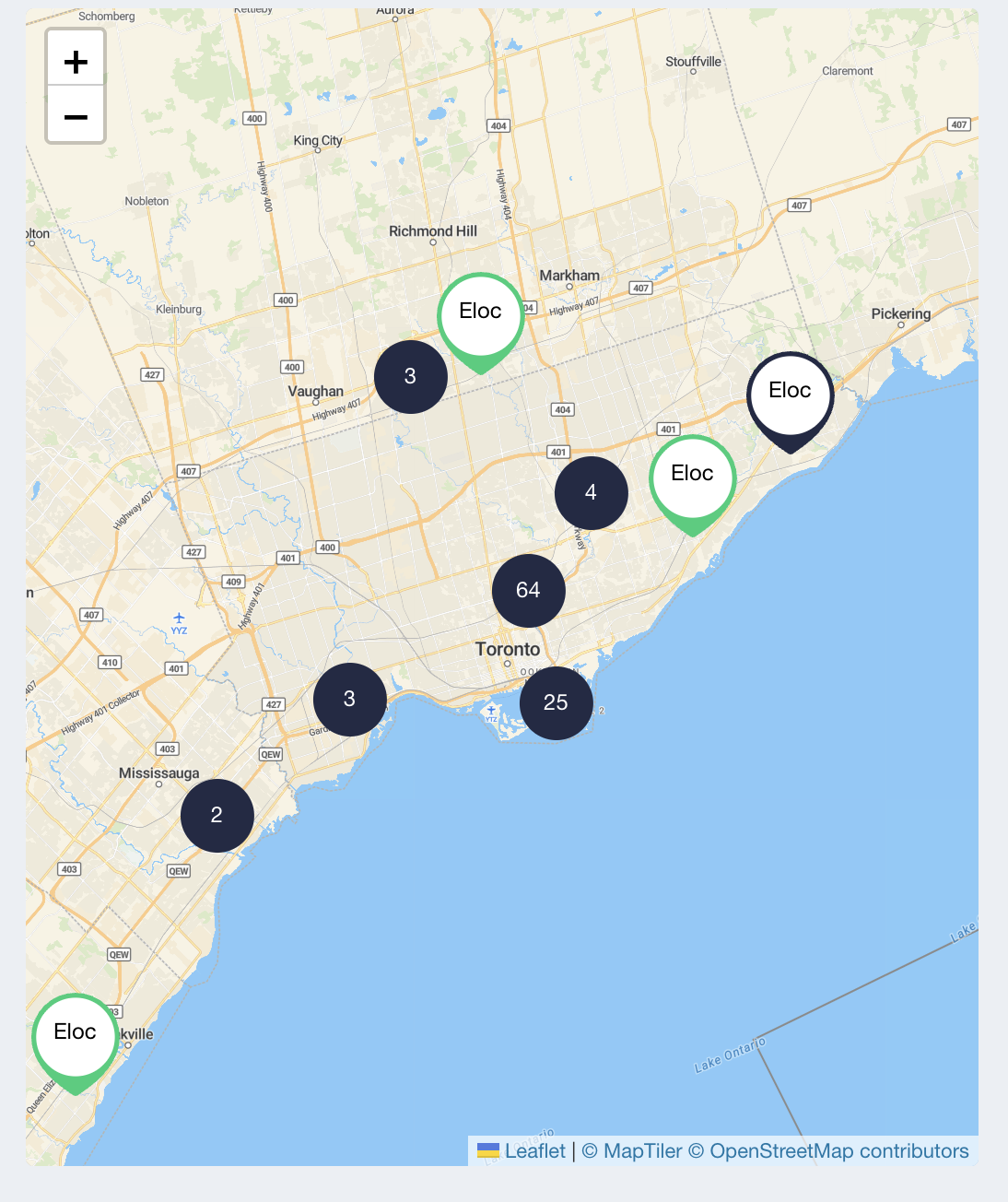
The map plots stations according to their configured location and provides a geographic summary of network coverage and availability.
Map legend
The legend distinguishes the connector or station states shown on the map:
- Available
- Preparing
- Charging
- Finishing
- Unavailable
- Reserved
- Fault
- Suspended EVSE
- Suspended EV
- Unknown

Map markers and clusters
When several stations are close together, the map combines them into a numbered cluster. The number represents the stations or mapped records grouped in that area. Select a cluster to zoom further into the area and reveal more specific markers.
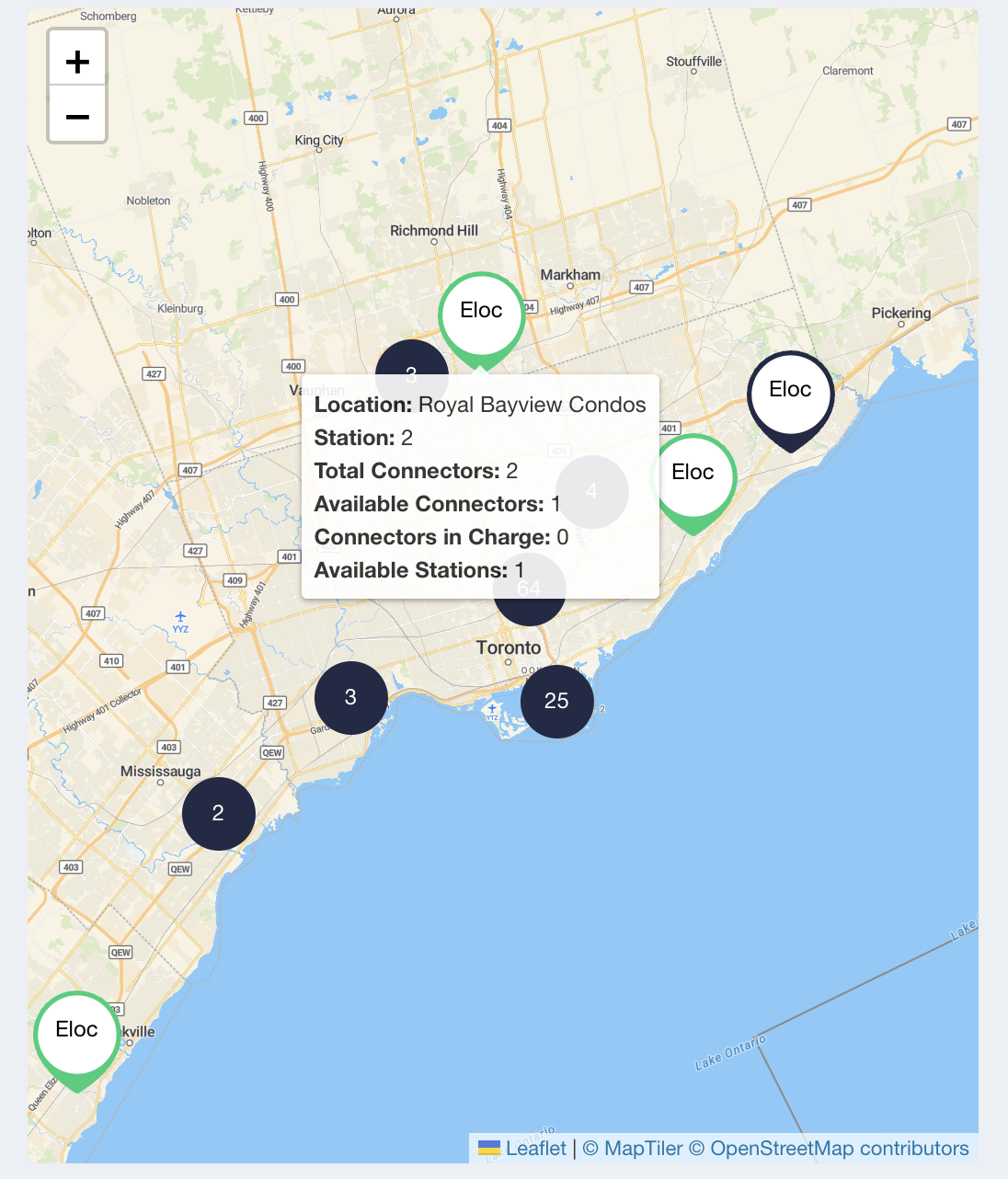
Select an individual marker to display a location summary. Depending on the available data, the summary can include:
- Location name
- Number of stations
- Total connectors
- Available connectors
- Connectors currently charging
- Available stations
Use + and − to zoom in or out. The map can also be panned to review stations in another area.
Station side panel
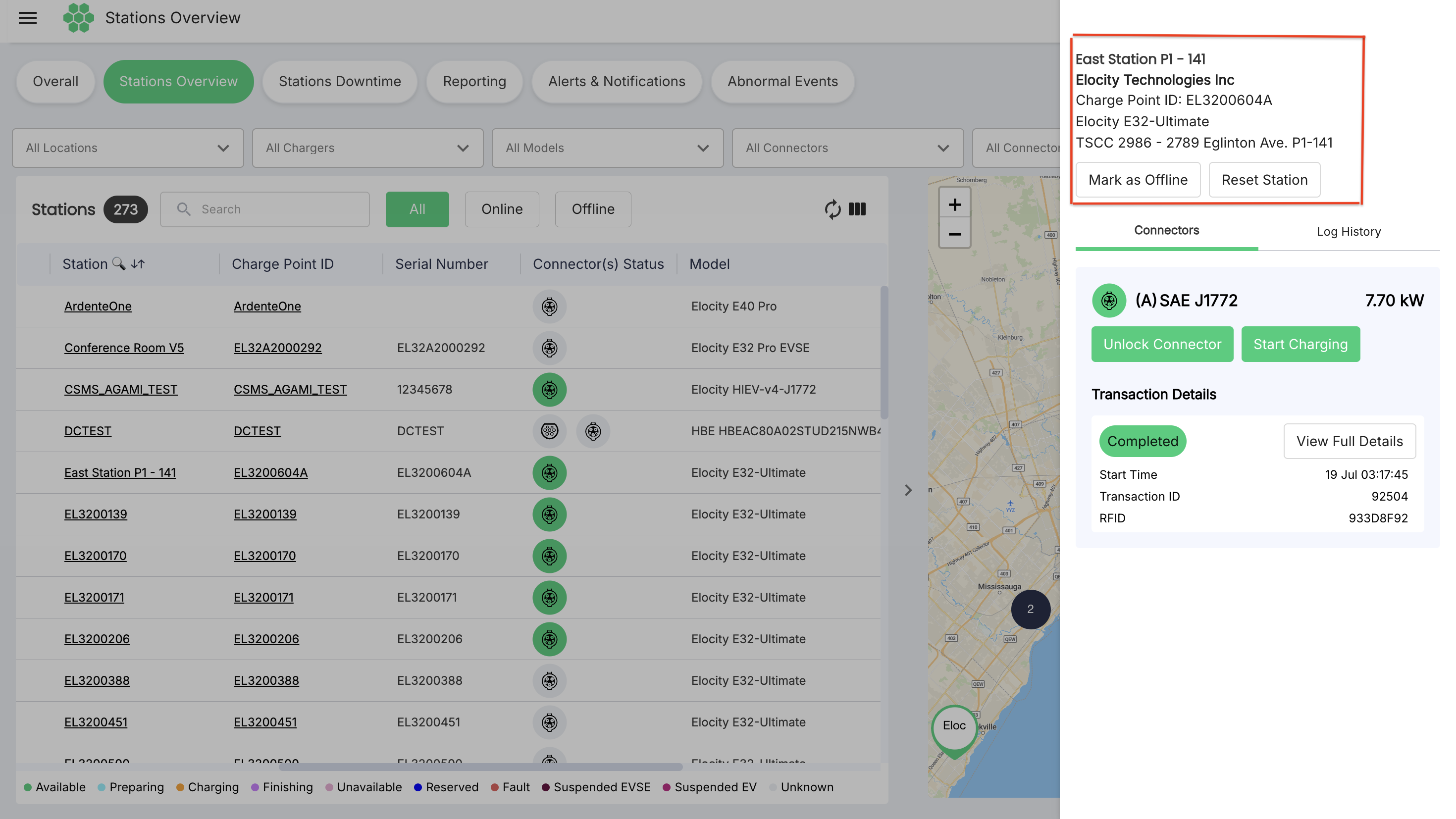
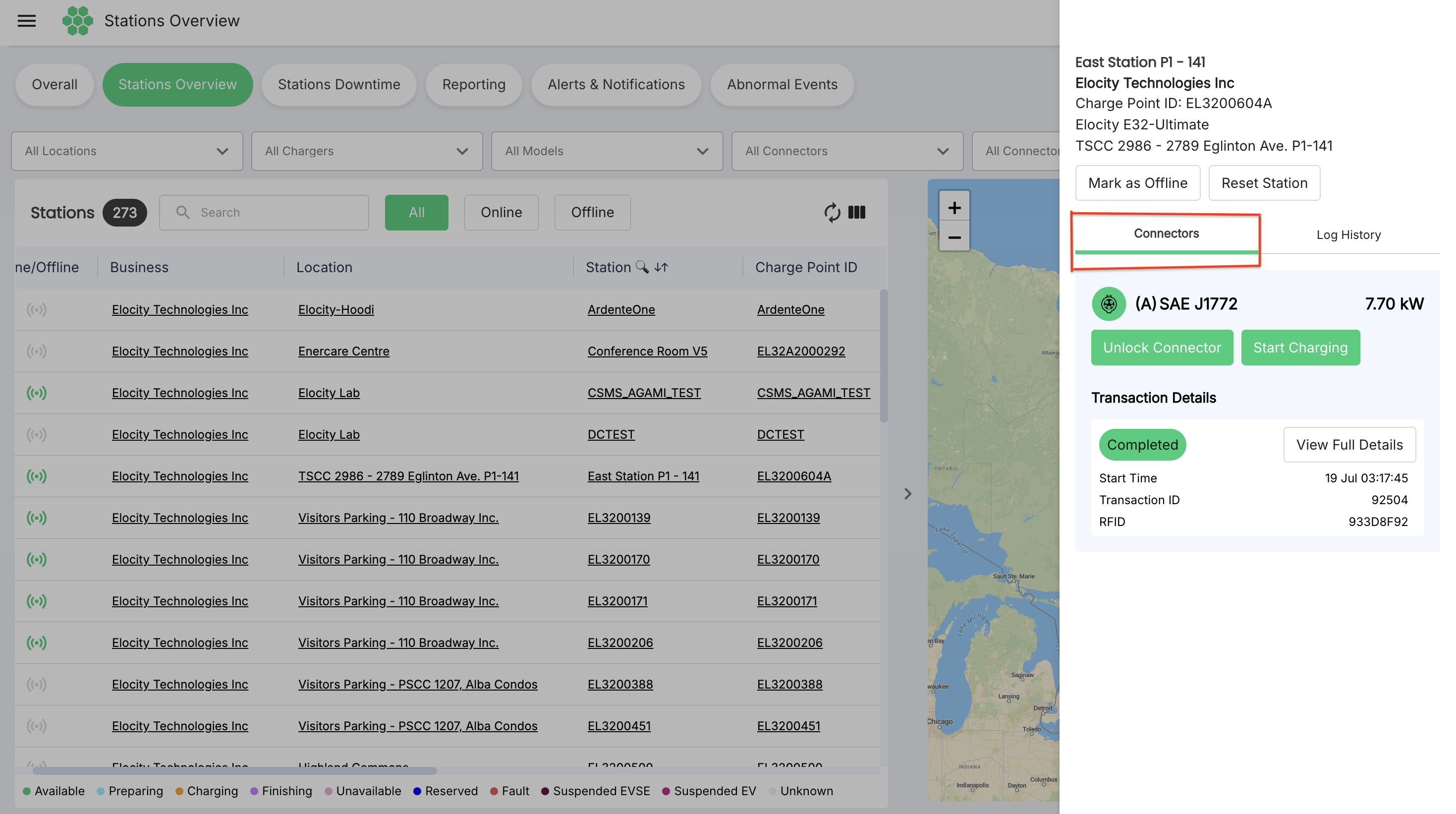
Select a linked value in the Station column to open the station side panel. The panel keeps the Stations Overview dashboard in the background and provides a focused operational view of the selected station.
The panel header identifies the station using information such as:
- Station name
- Business
- Charge Point ID
- Charger model
- Location
Station-level controls
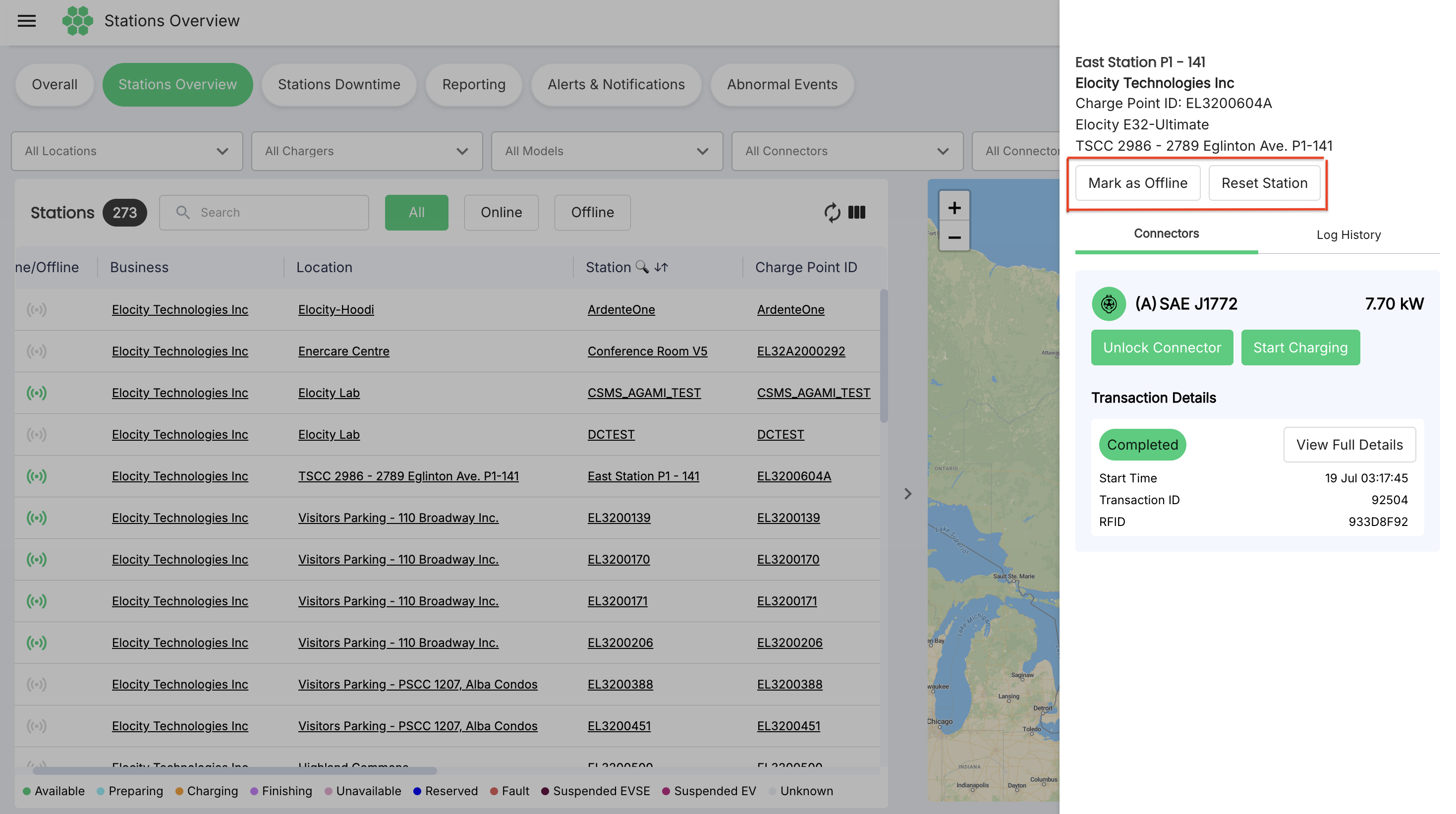
The panel can display operational controls such as:
- Mark as Offline — Changes the station's operational availability so that it is not presented as available for charging.
- Reset Station — Sends a reset request to the selected charge point.
These controls affect a live charging asset. Confirm the station identity, current sessions, business authorization, and operational impact before using them.
Connectors tab
The Connectors tab displays the connectors configured for the selected station. Information can include:
- Connector identifier
- Connector standard or type, such as SAE J1772
- Maximum power in kW
- Current connector or transaction state
Available connector controls can include:
- Unlock Connector — Sends a remote request to release the connector lock.
- Start Charging — Initiates a remote charging workflow for the selected connector.
The tab can also show the latest transaction summary, including status, start time, transaction ID, and RFID. Select View Full Details to open the complete transaction record when additional investigation is required.
The available controls can change according to connector state. For example, a connector with an active transaction may offer a stop action instead of a start action.
Log History tab
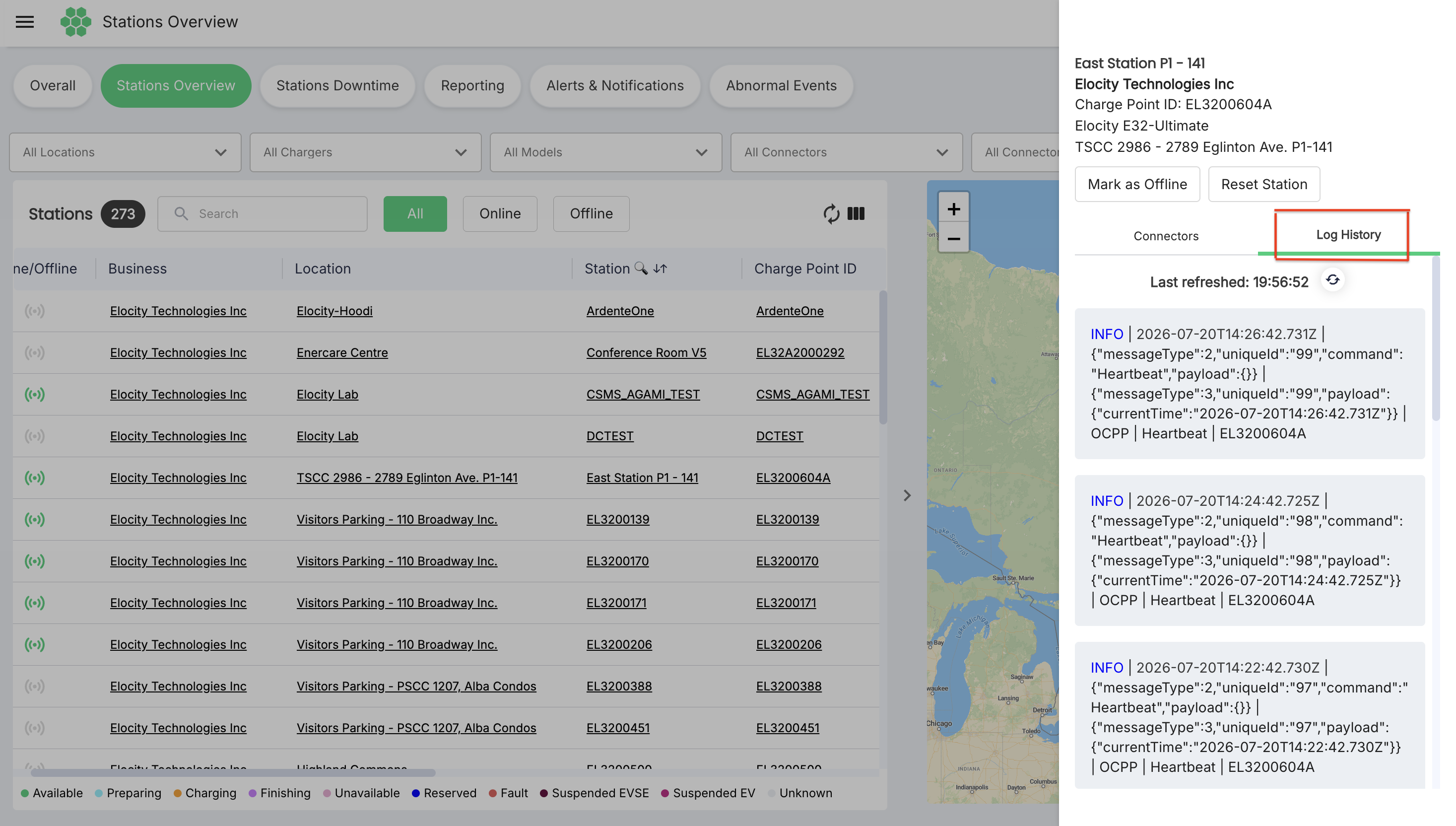
The Log History tab displays recent communication between the platform and the selected station. The panel shows the last refresh time and can include:
- Log severity, such as INFO or WARN
- Event timestamp
- OCPP request and response content
- OCPP message or command type
- Charge Point ID
Use these logs to review heartbeats, status changes, data-transfer messages, command responses, and protocol errors. Raw OCPP logs are primarily intended for support and technical troubleshooting.
Close the side panel to return to the full Stations Overview grid and map.
Linked Station Management page
Select a linked Charge Point ID to open the full Station Management page. This page provides more detailed configuration and diagnostic functions than the side panel.
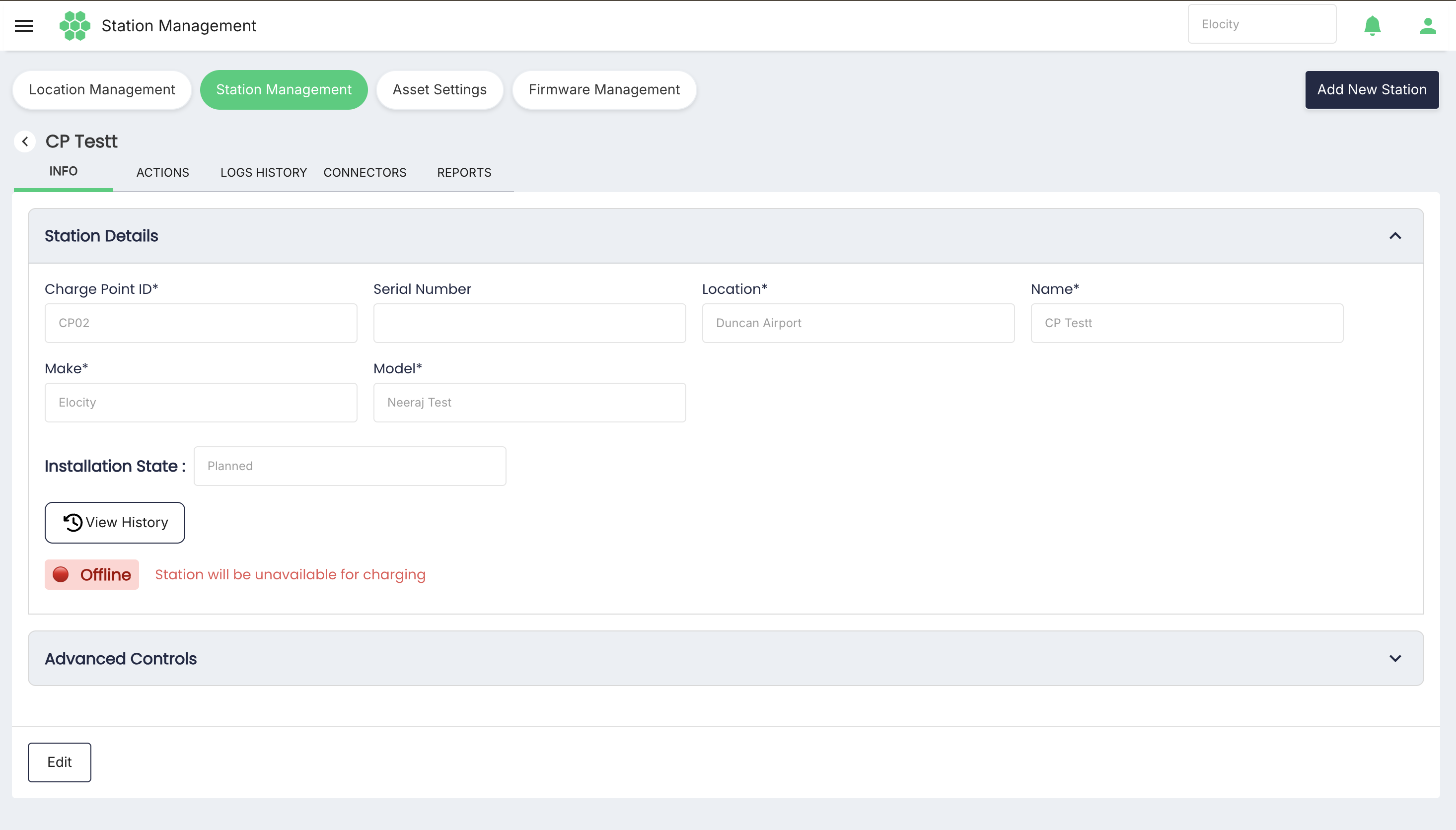
Info
The Info tab provides station identity and configuration details, including:
- Charge Point ID and serial number
- Location and station name
- Manufacturer and model
- Commissioned or decommissioned state and relevant date
- Current online/offline state
- Security profile and minimum-balance configuration
- Advanced options such as low-wallet auto-stop, duration-related settings, dedicated-customer assignment, and maintenance slots
Select Edit only when changes to the station configuration are required and authorized.
Actions
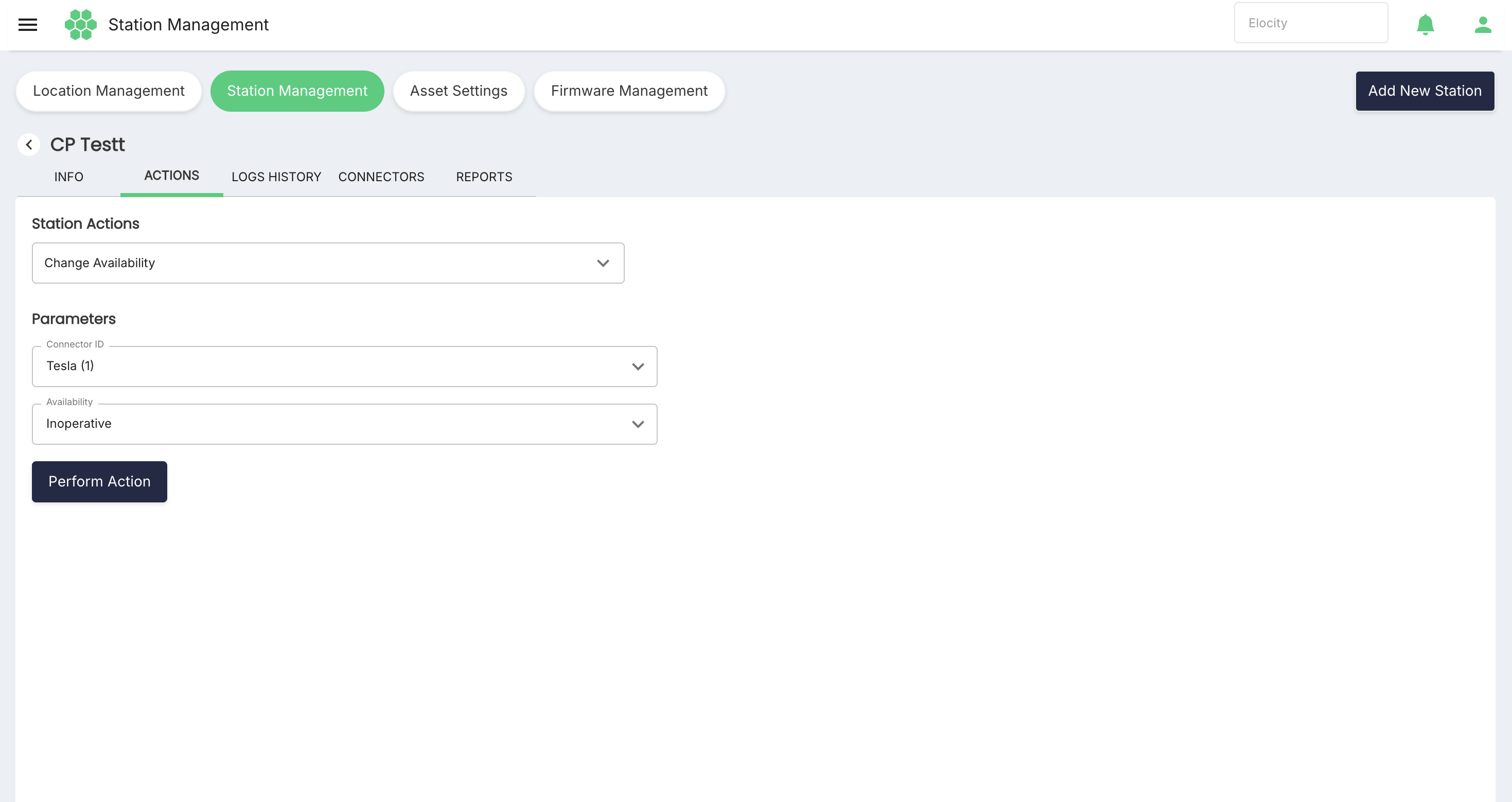
The Actions tab allows authorized users to send supported OCPP commands. Available actions can include:
- Change Availability
- Reset Station
- Change Configuration and Get Configuration
- Data Transfer
- Get Diagnostics
- Clear Cache
- Get Local List Version and Send Local List
- Trigger Messages
- Get Composite Schedule
- Clear Charging Profile and Set Charging Profile
- Unlock Connector
- Remote Start Transaction and Remote Stop Transaction
- Reserve Now and Cancel Reservation
After selecting an action, complete the displayed parameters and select Perform Action. Review Recent Logs for the command result. Never run an action solely to test whether it is available on a production station.
Logs History
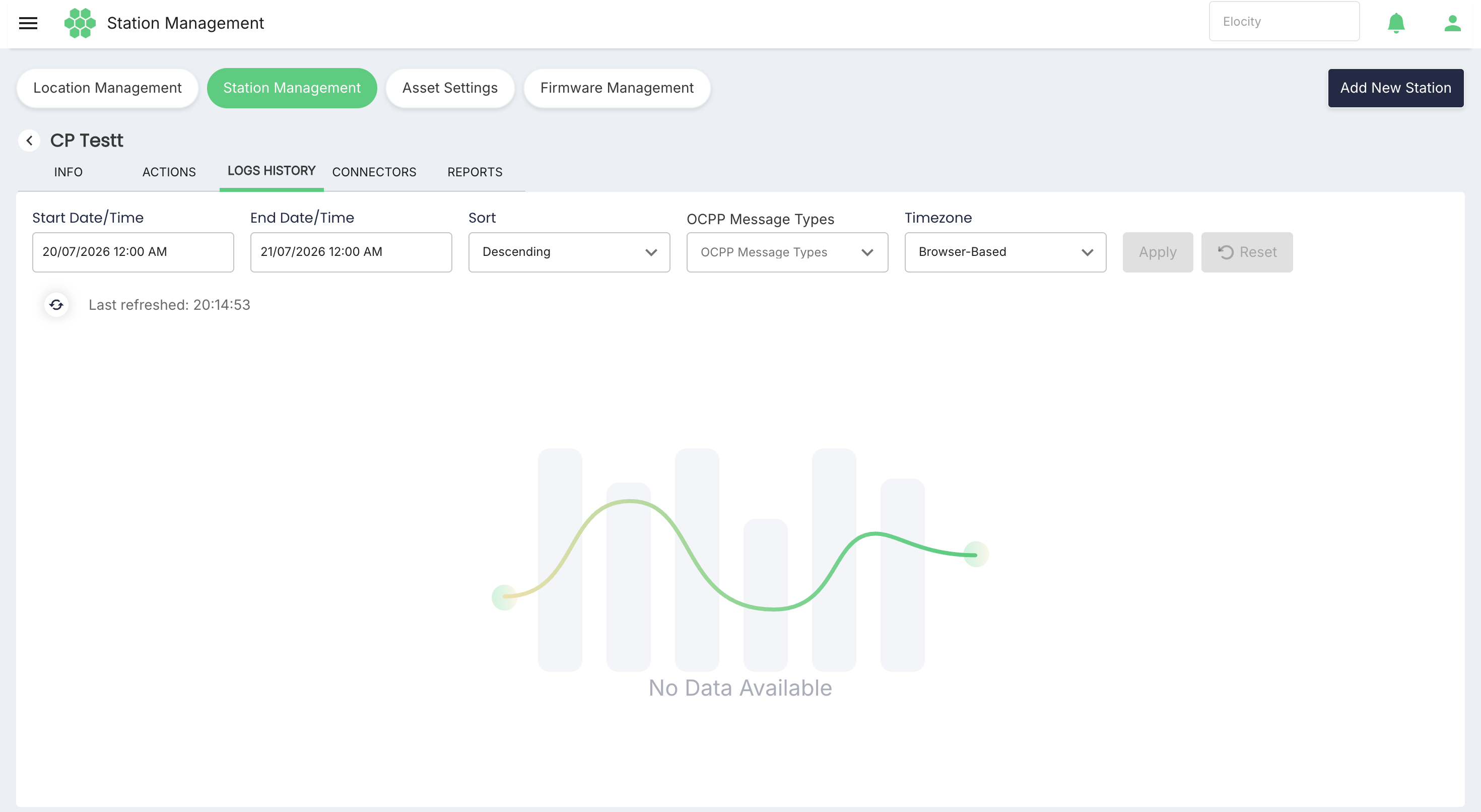
The full Logs History tab provides additional filters for station communications:
- Start date and time
- End date and time
- Ascending or descending sort order
- OCPP message types
- Display timezone, including browser-based time
Select Apply to retrieve matching messages or Reset to clear the filters. The Last refreshed value indicates when the displayed results were last updated.
Connectors
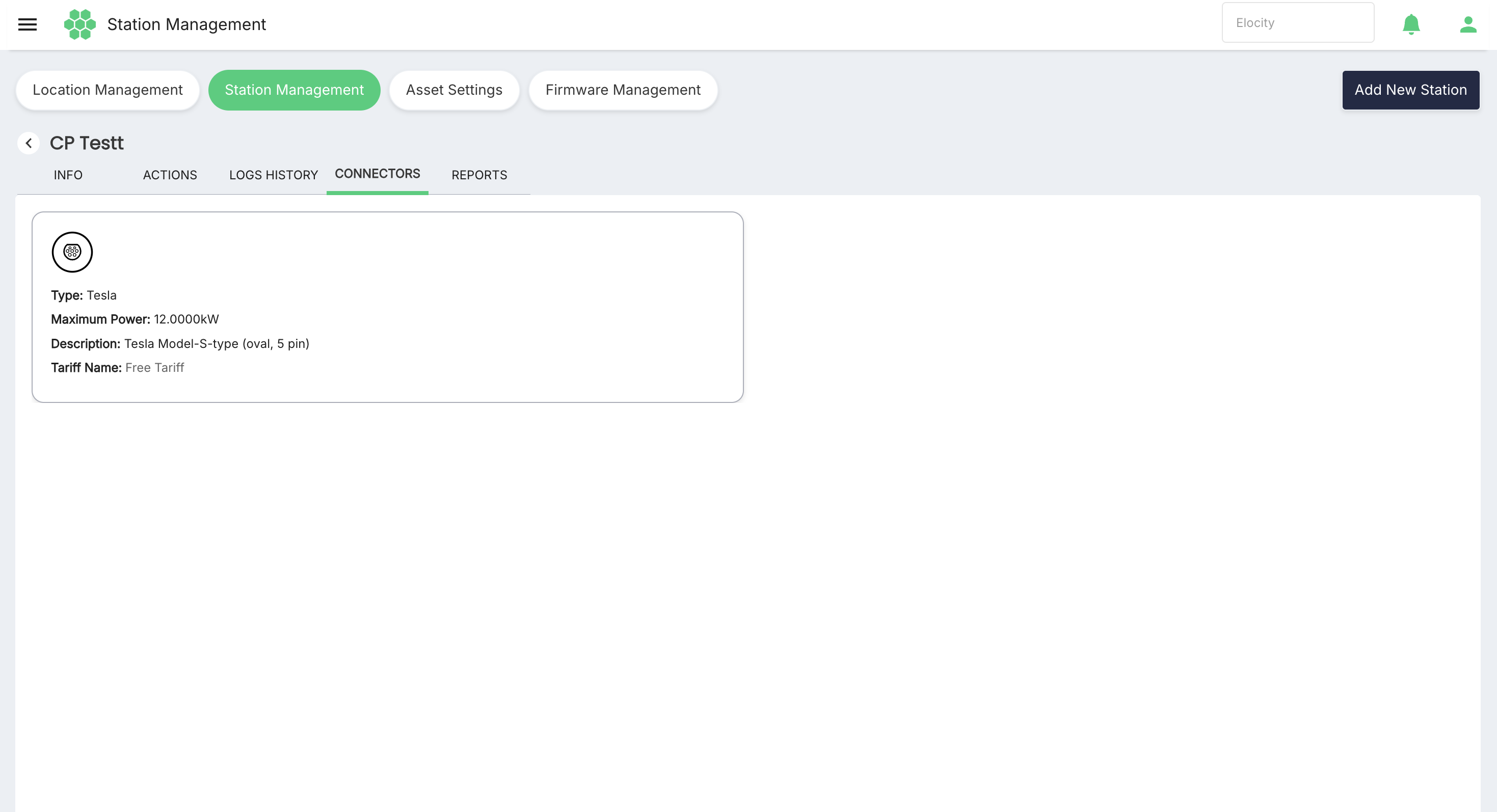
The full Connectors tab displays connector configuration, including connector type, maximum power, description, and assigned tariff name.
Reports
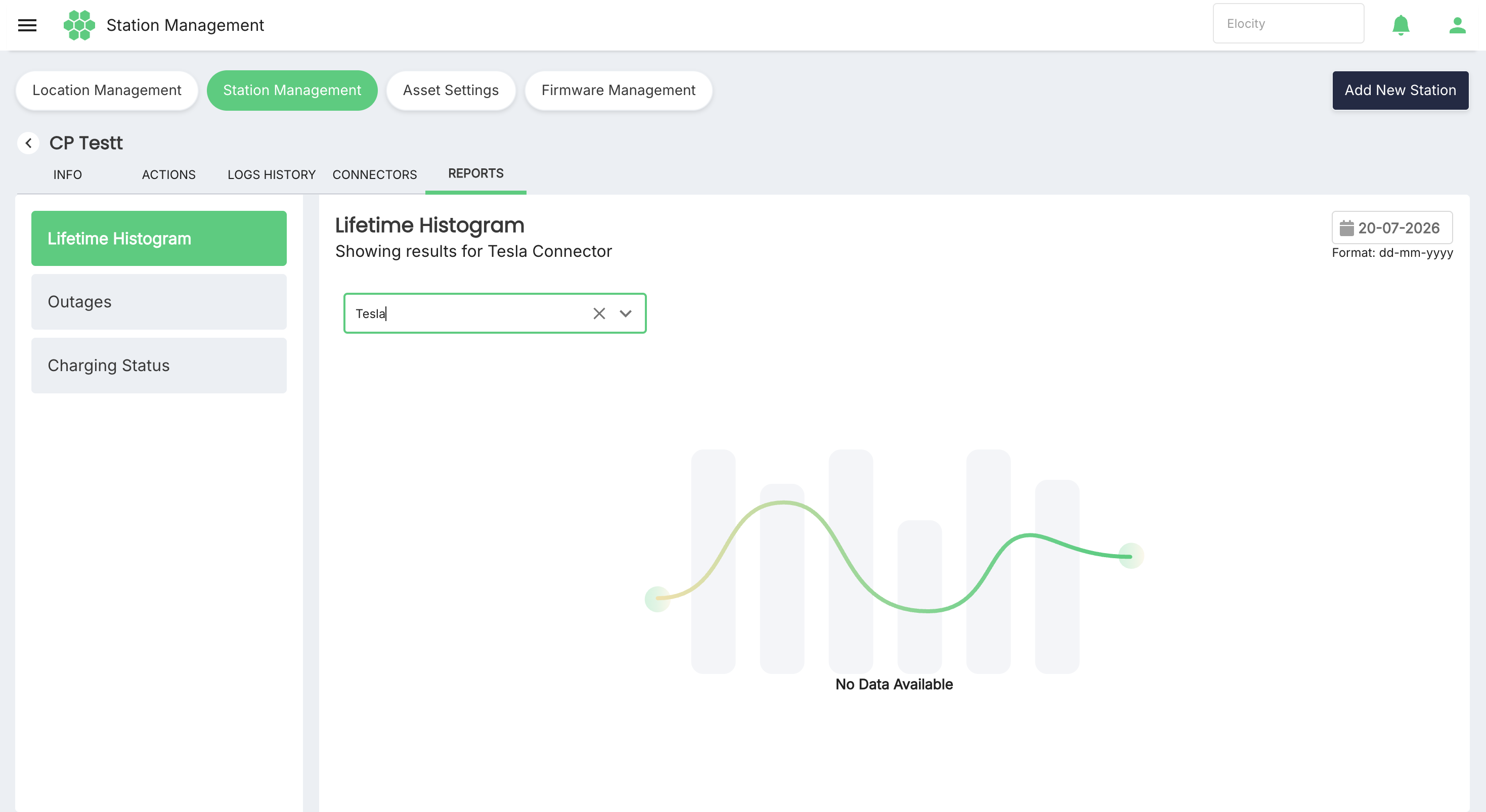
The Reports tab provides access to station performance and operational reports, enabling administrators to monitor charging activity, analyze historical data, track outages, and review charging status for effective station management.
Recommended monitoring workflow
- Select the required business and page-level filters.
- Select Apply and confirm the station count.
- Use All, Online, or Offline to focus the connectivity view.
- Search or sort the grid to locate the required station.
- Review connector state, real-time power, and last-online information.
- Use the map to assess the location and nearby station coverage.
- Open the Station link for a quick operational review in the side panel.
- Open the Charge Point ID only when full configuration, logs, or station actions are required.
- Use remote commands only after confirming the target station, connector, active-session state, and expected customer impact.
Interpretation and safety notes
- Online status confirms platform connectivity; it does not by itself confirm that every connector is available for charging.
- Connector status can differ between connectors on the same station.
- A blank or unknown value may indicate that the station has not reported the information or that the field is not configured.
- Map results depend on valid location coordinates being configured.
- Grid totals and available controls can differ between users because of business assignments, roles, and permissions.
- Refresh the page data before acting on an offline, faulted, or in-use station.
- Remote station and connector commands can interrupt service or affect an active driver. Use them only under an approved operational procedure.